What Are Calories?
They're not the enemy. They're just energy. Here's what you actually need to know.
Calories come up in almost every conversation about food, weight, and health. But a lot of people don't really know what they are beyond a number to fear on a food label.
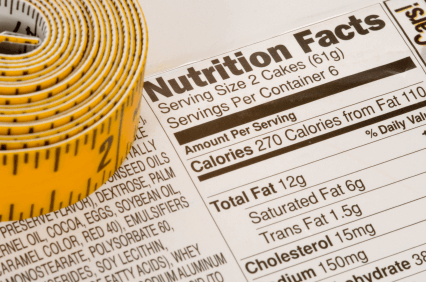
Simply put, a calorie is a unit of measurement that tells you how much energy a particular food or beverage will provide. When you eat, your body breaks that food down and converts it into energy. That energy, measured in calories, powers everything from breathing and digestion to your workouts and your thinking.
The number of calories any person needs depends on age, gender, weight, height, and activity level. The average adult needs anywhere between 1,500 and 2,500 calories a day. Men generally need more than women. Active people need more than sedentary people. Teenagers and growing children need more than older adults. It all makes intuitive sense once you understand what calories actually are.
But here's something just as important as the quantity of calories: the quality. We measure quality by the amount of actual nutrition a food provides alongside those calories. A 200-calorie serve of lentils and a 200-calorie handful of biscuits contain the same energy but are nutritionally worlds apart.
Calories per gram: The basics
Here's something useful to understand about the macronutrients and how they stack up calorically:
- 1 gram of protein = 4 calories
- 1 gram of carbohydrates = 4 calories
- 1 gram of fat = 9 calories
- 1 gram of alcohol = 7 calories
Protein and carbohydrates have the same calorie density. Fat has more than double. That doesn't make fat bad; it just means a little goes a long way, and it's worth being aware of portion sizes with higher-fat foods.
Alcohol sits second only to fat in calorie density. It's also worth knowing that your body metabolises alcohol first, before fat, carbohydrates, and protein. This slows your body's fat-burning ability considerably. If reducing body fat is a goal, alcohol is worth being mindful of.
Why understanding calories matters for weight management
Weight change, at its core, comes down to energy balance: the relationship between the calories you consume and the calories you burn. Consume more than you burn consistently, and you'll gain weight. Consume less, and you'll lose it. Consume roughly the same, and you'll maintain.
Understanding this doesn't mean you need to obsessively count every calorie. I've never counted calories in my life. But it does mean having a general awareness of what you're eating and how much, which is different from anxiety about food.
Calorie intake and portion awareness
Many people genuinely underestimate how much they eat. By understanding roughly how many calories are in different foods, you develop a natural sense of appropriate portion sizes without having to measure everything.
Creating a balanced diet
Understanding calorie density helps you build a diet that meets your nutritional needs without routinely overconsuming. Foods like vegetables, legumes, and whole grains are high in nutrition and relatively low in calories. That's the sweet spot.
Weight loss and the calorie deficit
To lose weight, you need to burn more calories than you consume. That's a calorie deficit. This doesn't mean starving yourself. It means making slightly better choices more consistently and moving your body regularly. Small, sustainable changes compound over time.
Mindful eating
Understanding calories, even loosely, encourages you to pay attention to what you're eating and why. That awareness is one of the most powerful tools in your nutritional toolkit. It's not about restriction. It's about eating intentionally.
The goal isn't to be ruled by numbers. It's to understand them enough that you can make informed choices naturally. That's what I've done my whole life, and it's a big part of why nutrition has never felt like a burden.
Health should feel like your best life, not a break from it.
Marco ☕
About Me

I'm Marco Asnicar, personal trainer, nutrition coach and founder of Vitality Marco. I didn't discover the Mediterranean method. I grew up living it, shaped by Italian roots, real food and movement as a natural part of daily life. It took me until recently to realise that what always felt completely normal to me is exactly what most people spend years searching for.
I coach men and women aged 35 to 55 to do the same. No restriction. No fads. No giving up the life you love. Just a way of eating and living that genuinely feels good and gets better every year.
Want to know more about my story and approach? Read my full About Me page.