Resistant Starch Foods
These Foods Are Already in Your Kitchen. Just Not Being Used Properly
I've always included resistant starch foods in my diet. They aid in weight management, support gut health and help curb cravings throughout the day. For most people they're an underused tool.
What is resistant starch?
Resistant starch is a carbohydrate that resists digestion in the small intestine. Unlike other starches that are broken down into simple sugars, resistant starch passes through the small intestine largely intact and reaches the large intestine, where it acts as food for beneficial gut bacteria. It behaves more like fibre than a typical carbohydrate, delivering a range of health benefits that regular starch doesn't provide.
What are the benefits of resistant starch?
Promotes healthy digestion
Resistant starch acts as a prebiotic, feeding the beneficial bacteria in your gut. This improves overall digestive health, regularity and the diversity of your gut microbiome.
Supports weight management
Resistant starch has a lower calorie content than regular starch and significantly increases feelings of fullness, reducing the likelihood of overeating and unnecessary snacking.
Improves insulin sensitivity
Consuming resistant starch improves your body's response to insulin, helping maintain stable blood sugar levels. This is particularly beneficial for managing or preventing type 2 diabetes.
Supports heart health
Resistant starch has been linked to lower cholesterol levels and reduced risk of heart disease through its effect on short-chain fatty acid production and cholesterol absorption.
Enhances satiety
Resistant starch increases feelings of fullness and reduces hunger more effectively than regular starch, making it easier to manage calorie intake without conscious restriction.
Boosts nutrient absorption
Resistant starch helps increase the absorption of certain minerals, particularly calcium and magnesium, ensuring you get more benefit from the foods you eat.
The best resistant starch foods
Legumes
Lentils, chickpeas, black beans and kidney beans are excellent sources of resistant starch. I eat legumes most days, usually in a mixed bean salad or combined with rice. They're versatile, filling, affordable and among the most nutritious foods available.
Cooked and cooled rice, pasta and potatoes
Cooking and then cooling starchy foods significantly increases their resistant starch content. The cooling process transforms some digestible starch into resistant starch through a process called retrogradation. This is one of the reasons I prepare my brown rice and potatoes at the start of the week. The nutritional profile actually improves over time in the fridge.
Unripe bananas
Green or unripe bananas contain higher amounts of resistant starch than ripe ones. I prefer my bananas ripe and yellow. But if I want to add resistant starch without tasting it, I add an unripe banana to a smoothie. The flavour is masked by other ingredients and the benefit is retained.
Oats
Raw oats are a particularly good source of resistant starch. Overnight oats retain more resistant starch than cooked porridge. I make overnight oats regularly and they're one of my favourite quick breakfasts.
Cooked and cooled potatoes
When cooked and cooled, potato resistant starch content increases significantly. A potato salad made from refrigerated boiled potatoes is a genuinely excellent source of resistant starch alongside regular nutritional benefits.
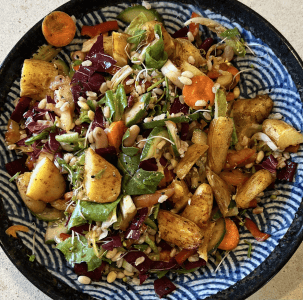
My Rice, Lentils and Potato Salad
This salad is my go-to dish for loading up on resistant starch. This salad is very satiating. If you want extra protein, add boiled eggs, grilled chicken, or smoked salmon.
1 cup cooked brown rice cooled overnight.
½ cup Beluga lentils or legumes of your choice.
1 - 1½ cups of baked potatoes cooled overnight.
1½ cups of mixed veggies (cucumber, carrots, capsicum (peppers), kale, cabbage, parsley, spinach, beetroot and shallots) chopped finely.
Hemp seeds, pine nuts and black nigella seeds are sprinkled in the salad mix.
Salad dressing or your choice (optional).
Simple ways to add more resistant starch foods to your diet
- Add legumes to salads, soups and stews daily
- Prepare rice, pasta and potatoes ahead of time and refrigerate before eating
- Make overnight oats instead of cooked porridge
- Add an unripe banana to smoothies
- Include potato salad made from cooled cooked potatoes as a regular side dish
- Eat hummus made from chickpeas as a regular snack
Resistant starch foods are already part of a Mediterranean-style diet. Legumes, whole grains and potatoes are all staples of how I eat every day. The benefit comes from eating them consistently over time rather than treating them as supplements.
Health should feel like your best life, not a break from it.
Marco ☕
About Me

I'm Marco Asnicar, personal trainer, nutrition coach and founder of Vitality Marco. I didn't discover the Mediterranean method. I grew up living it, shaped by Italian roots, real food and movement as a natural part of daily life. It took me until recently to realise that what always felt completely normal to me is exactly what most people spend years searching for.
I coach men and women aged 35 to 55 to do the same. No restriction. No fads. No giving up the life you love. Just a way of eating and living that genuinely feels good and gets better every year.
Want to know more about my story and approach? Read my full About Me page.