Healthy Weight Loss Smoothies
The Quickest Healthy Meal I Know When I'm Short on Time
I've been making nutritional smoothies for years. I'll be honest, I prefer eating whole food, but smoothies genuinely are one of my go-to meals when I'm short on time, training hard or want to get lean without feeling deprived. I like to think of them as the ultimate fast food, just a very different kind.
When done properly, healthy weight loss smoothies deliver a solid amount of protein, fibre and essential nutrients in about two minutes. When done poorly, they're just expensive sugar water. Here's how to get it right.
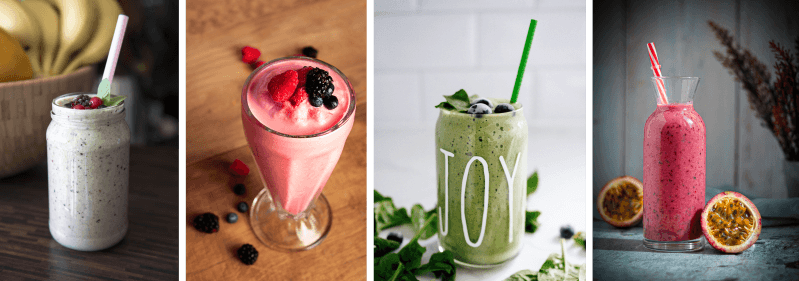
Why healthy weight loss smoothies work
- Nutrient-rich: packed with vitamins, minerals and antioxidants from whole food ingredients
- Support weight management: high in fibre and protein while staying low in calories when made correctly
- Increase energy: the combination of fruits, vegetables and protein provides sustained energy without a blood sugar crash
- Improve digestion: fibre-rich ingredients promote healthy digestion and regularity
- Keep you hydrated: smoothies contribute significantly to your daily fluid intake
- Genuinely convenient: two minutes from fridge to glass. When healthy food is also the fastest option, consistency becomes easy
How to make a delicious weight loss smoothie
Making a great smoothie is simple but it's just as easy to make a bad one. A bad smoothie that makes you gag is not going to become a sustainable part of your routine. Here's how to get it right.
1. Choose a variety of fruits and vegetables
Select a mix of your favourite fruits and vegetables. A combination of different colours ensures you're getting a wide range of nutrients. Popular choices include bananas, berries, spinach, kale and avocados. Adding spinach is my top recommendation for boosting nutrition without affecting the taste.
2. Use a liquid base
You'll need a liquid to blend everything together. Water is the most calorie-efficient option. Almond milk, oat milk, coconut water or low-fat yoghurt add creaminess and flavour. I use water most often when I'm focused on getting lean.
3. Add a protein source
This is what turns a smoothie into a proper meal that keeps you full. Greek yoghurt, cottage cheese, chia seeds or a scoop of quality protein powder all work well. I use The Healthy Chef Organic Pea Protein, which blends smoothly and doesn't overpower other flavours.
4. Include healthy fats
A tablespoon of nut butter, a handful of nuts or seeds or a small piece of avocado provides satiety and helps with vitamin absorption. Don't skip the fats. They make the smoothie far more satisfying.
5. Sweeten naturally if needed
Instead of added sugars, use a small amount of honey, maple syrup, coconut sugar or a date if you need sweetness. A ripe banana usually provides enough natural sweetness on its own.
6. Experiment with flavours
A dash of cinnamon, a sprinkle of cocoa powder, good quality ground coffee or a few drops of vanilla extract can transform a basic smoothie. Ginger and turmeric add both flavour and genuine health benefits.
7. Add protein powder after blending
For the smoothest texture, blend all other ingredients first, then add protein powder and blend again briefly. This prevents clumping.
8. Adjust the consistency
If your smoothie is too thick, add a little water and blend again. Start with less liquid than you think you need and adjust up.
Boost the nutritional value
To make your smoothies even more nutritious, consider adding some of these health-promoting ingredients.
- Oat bran, wheat germ or psyllium husk for extra fibre
- Nuts, flaxseeds or LSA (ground linseeds, sunflower seeds and almonds) for fibre, protein and healthy fats
- Spirulina powder, barley grass powder or wheatgrass powder for a micronutrient boost
- A handful of spinach. It won't affect the taste but significantly boosts the nutritional profile of any smoothie
Tips for making your smoothies even better
- For dairy or soy intolerance, use almond, oat, macadamia, hazelnut or coconut milk
- Frozen fruit works just as well as fresh and is often more affordable. Frozen berries are particularly good
- If using store-bought fruit juice, dilute it with water to reduce the sugar content. Better still, make your own
- Serve your smoothie in a proper glass rather than a shaker. It makes the whole experience more enjoyable
- For summery smoothies, keep your liquids chilled and use crushed ice
- Add yoghurt or avocado to make your smoothie creamier and more indulgent
- Make a double batch and refrigerate one serving for the next day
- Try a different recipe every day to keep things interesting
- Remove seeds from fruit when juicing to avoid bitterness
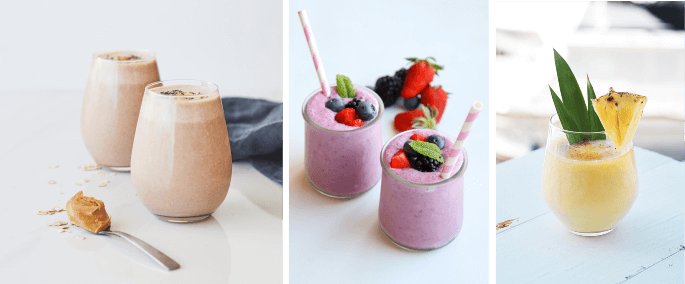
Invest in some equipment
If you're serious about making smoothies a regular part of your life, as I am, it's worth investing in decent equipment. A quality blender and a juicer will genuinely transform the experience. The difference between a smoothie made in a cheap blender and one made in a quality machine is significant. Better texture, smoother consistency, less effort and frankly more enjoyment.
A good blender
A high-powered blender is the single most important piece of smoothie equipment you can own. It handles frozen fruit, ice, tough greens, nuts and seeds without leaving chunks behind. A powerful blender breaks everything down completely, giving you that smooth, creamy texture that makes a smoothie genuinely enjoyable to drink.
A quality blender also makes the process faster and easier, which means you're more likely to actually use it every day. For something you plan to use daily or close to it, buying cheap is a false economy. A good blender is a long-term investment in your health.
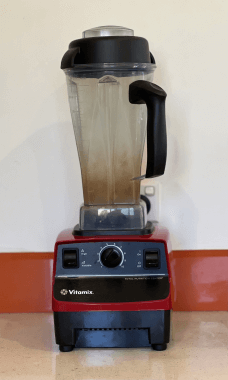
My wife and I invested in a Vitamix blender years ago and we have never looked back. Its blending power, durability and versatility make it the best choice I know for creating a wide range of nutritious and delicious smoothies. If you're serious about making smoothies a long-term habit, it's the one I'd recommend.
- Blends frozen fruit and ice smoothly without chunks
- Handles tough greens like kale and spinach completely
- Processes nuts and seeds without leaving gritty textures
- Cleans quickly, usually with a quick rinse or dishwasher-safe components
- Lasts for years with proper care
A juicer
Many smoothie recipes use fruit or vegetable juice as their liquid base. A juicer lets you make your own fresh juice from whole produce rather than buying the sugar-laden processed versions from the supermarket. Homemade juice has less sugar, more nutrients and tastes significantly better. It's also one of the most satisfying things you can do in a kitchen.
Here's what a juicer adds to your smoothie-making:
- Enhanced flavour: fresh juice produces a more concentrated, vibrant flavour than anything from a carton
- Increased nutrient content: freshly juiced produce retains far more vitamins, minerals and antioxidants than processed juice
- Smoother texture: juicers remove fibrous pulp, creating a smoother liquid base for your smoothies
- Complete control: you decide exactly what goes in, no added sugar, no preservatives, no compromises
- Variety: you can juice almost any fruit or vegetable, giving you an enormous range of base flavours
You don't need both a blender and a juicer from day one. Start with a good blender and add a juicer once you're making smoothies consistently. Both tools pay for themselves quickly in reduced food waste, better nutrition and the simple pleasure of a genuinely great smoothie.
Browse the recipes
Over 100 nutrition-packed, protein-rich smoothie recipes organised alphabetically across four pages.
To learn how to build the perfect meal in a blender, check out The super shake guide from Precision Nutrition.
Health should feel like your best life, not a break from it.
Marco ☕
About Me

I'm Marco Asnicar, personal trainer, nutrition coach and founder of Vitality Marco. I didn't discover the Mediterranean method. I grew up living it, shaped by Italian roots, real food and movement as a natural part of daily life. It took me until recently to realise that what always felt completely normal to me is exactly what most people spend years searching for.
I coach men and women aged 35 to 55 to do the same. No restriction. No fads. No giving up the life you love. Just a way of eating and living that genuinely feels good and gets better every year.
Want to know more about my story and approach? Read my full About Me page.